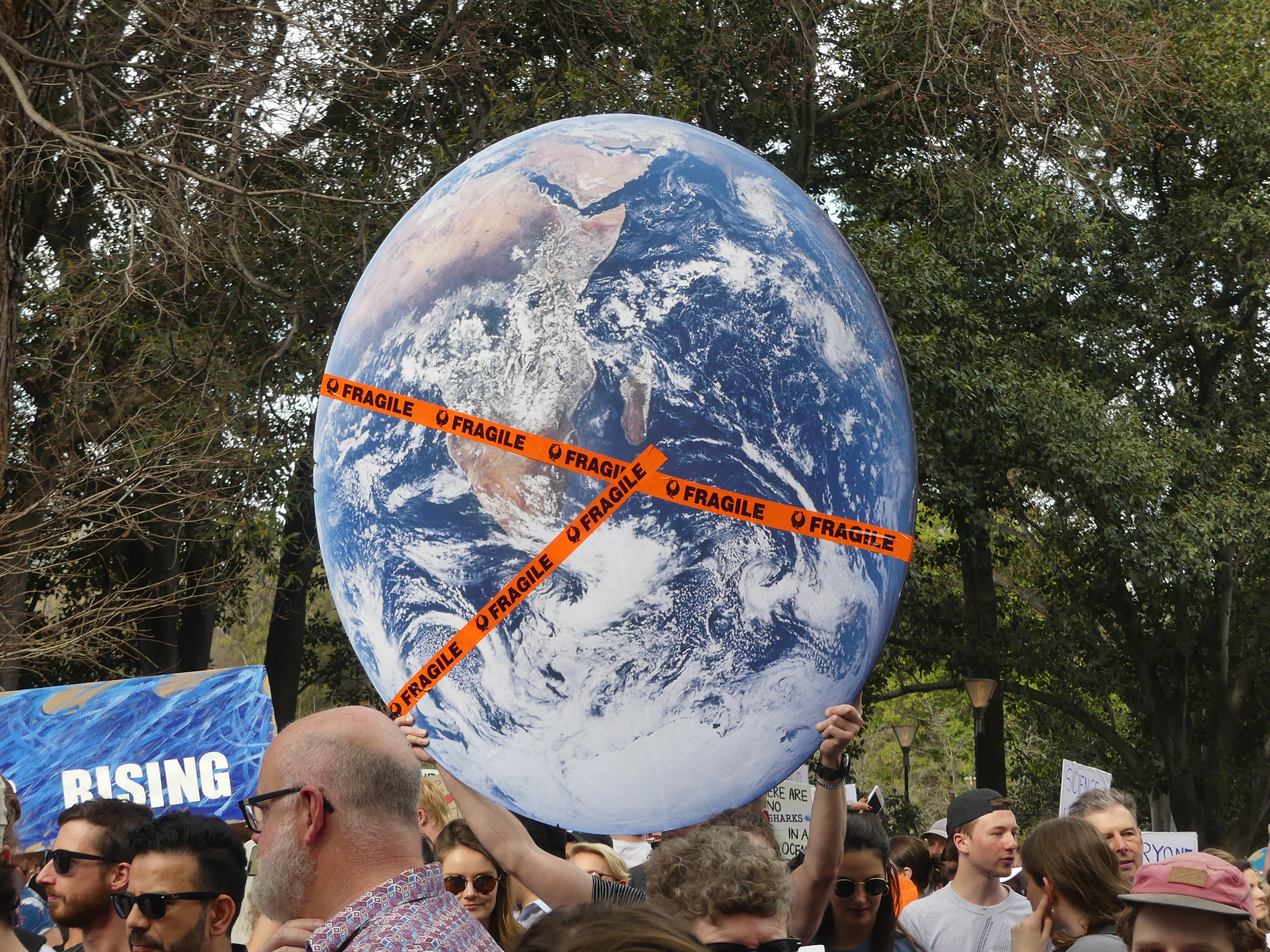
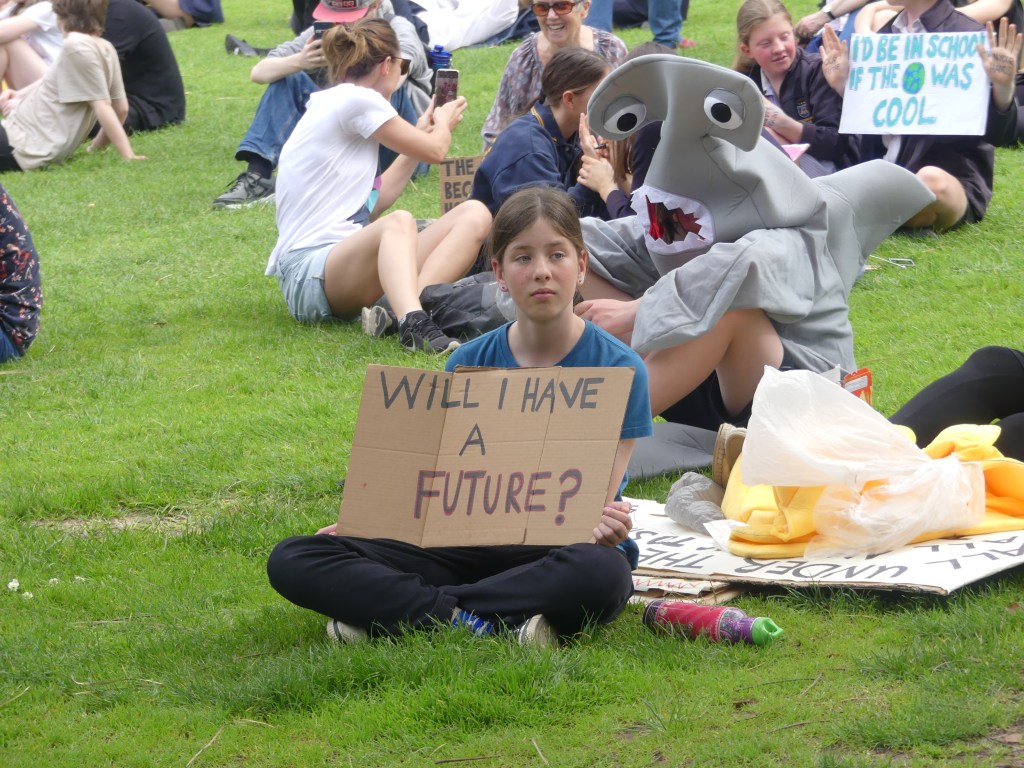
I had decided some time back that I would join the student’s climate strike on 20th September, here in Melbourne. In the lead up there was a lot of noise on social media, encouraging people of all ages to attend. I felt it was my duty to stand in solidarity with these kids, especially as I am part of the generation that has contributed most to the planet’s destruction.
A bit of history
Back in 1974 when I was in high school, completing my HSC as it was called then, two books on our English reading list were Only One Earth by Barbara Ward and Rene Dubois, published 1972 and Silent Spring by Rachel Carson published 1962.
At the UN conference in Stockholm of 1972, it was already recognised that the planet needed protecting from environmental degradation and pollution, that wildlife needed to be safeguarded and that renewable resources should be encouraged over non renewables, and incidentally that weapons of mass destruction be eliminated. A declaration of 26 principles concerning the environment was created, and action plan with 109 recommendations. This declaration would go on to inform later conferences at Rio 1992 Earth summit, New York 1997 Earth summit II and Johannesburg 2002. We have had the Kyoto Protocol 1997, and the Paris Agreement and untold numbers of conventions on environment and climate change over the last 5 decades. All of these conferences recognised the threat; all of these conferences have written up declarations and protocols about how we need to collaborate globally to avert disaster.
The book Only One Earth: the care and maintenance of a small planet was an unofficial report to the UN on the subject. Silent Spring was about the indiscriminate use of pesticides and chemicals damaging our environment and the health of humans and animals.
My point is; all of this stuff about how we were trashing the planet, using up all the resources and making the place uninhabitable for humans and animals alike, was well known back in the late 1960’s and early 1970’s. We learnt about the greenhouse effect in high school. We knew global warming would destroy the oceans, we knew that cutting down forests removed our carbon sinks and destroyed habitat, we knew water management would be a problem, we knew we were wasting too much, consuming too much and polluting too much. Hell, the UN even made a whole bunch of recommendations about how we could manage this. My generation were teenagers then, and like Greta Thunberg, we were worried about the future of our planet. Yet the degradation, destruction, deforestation and pollution has continued almost unabated for 50 years. I know as an individual I am as much to blame as governments and corporations. I and my generation have been consumers of goods and energy at a rate unprecedented in human history. The cognitive dissonance is astonishing.
I have always felt that as an individual I couldn’t make a difference. How would it help the planet if I alone did not waste, did not buy new shoes every season, did not use my petrol guzzling car, did not turn on my air conditioning on hot days, did not buy the latest technology? I think this was what we all thought, so we all kept on buying, using and wasting over the course of our lives. We blamed governments and big business for destroying the planet. Yet it was our demand for things, energy and growth that fuelled what governments and big business did. We must take responsibility for this; our consumption is destroying the planet.

The actions of one schoolgirl have shown us that one person can make a difference. Whether governments and big business will take notice, we are yet to see. But if nothing else, she has sparked discussion about climate change all around the world.
You can be sure if there is an economic benefit to conserving energy, changing to renewables, reducing waste, then it will happen. But will it happen in time? The recent IPCC report on the heating of the oceans, and subsequent impacts across the globe are sobering indeed, we have already reached a point of no return, which will result in severe coastal flooding, coral bleaching and more intense storms, much of which we are already seeing. The earth’s oceans have heated faster than expected and will go on doing so.
We must act now to avert future escalation of this problem, but while we have governments and leaders who deny climate change, who only think of their own present power base, nothing will change. As individuals we can reduce our carbon footprint by using solar panels, consuming less and avoiding plastics, taking public transport etc, but this is just small fry. Significant change needs to be happening nationally and internationally on a global scale; to stop mining fossil fuels, move to renewable energy sources, to stop deforestation, to plant tress on a large scale, protect vulnerable people in developing countries, improve water and waste management. All of these things are possible, but Governments must step up and take action.
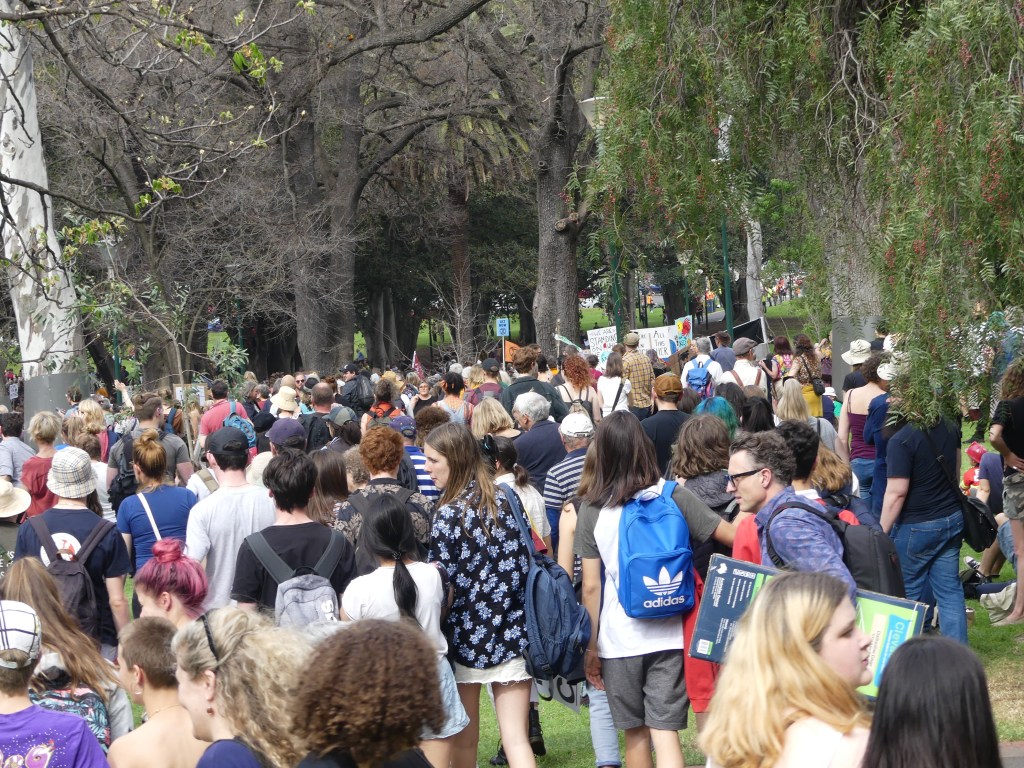
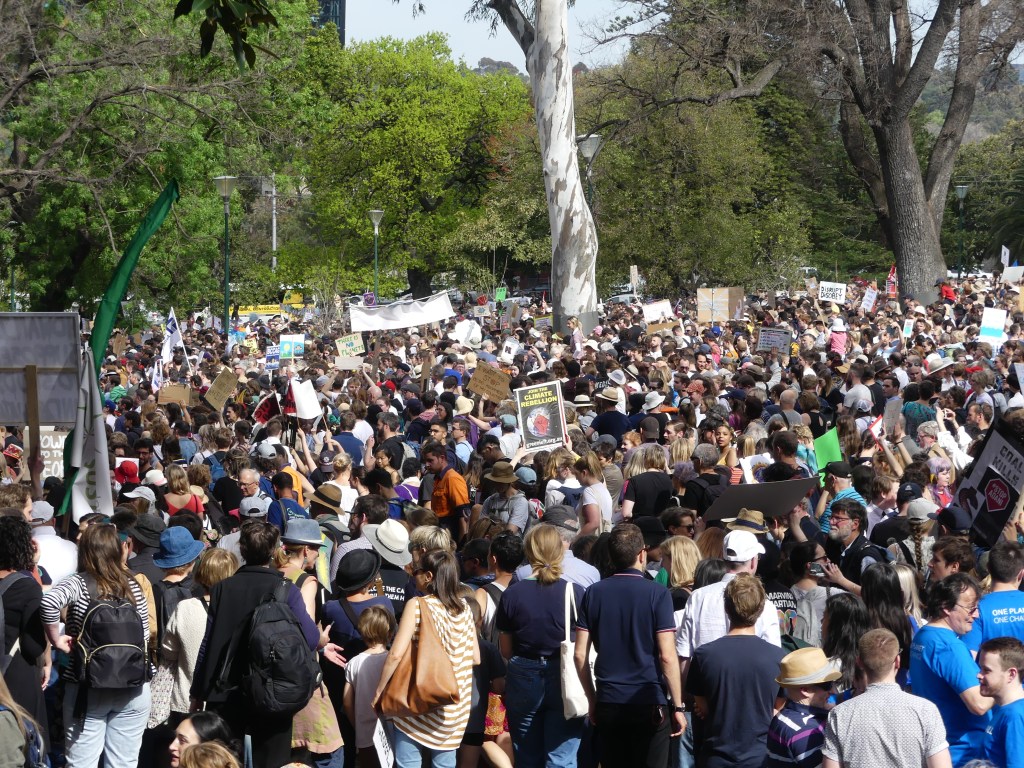
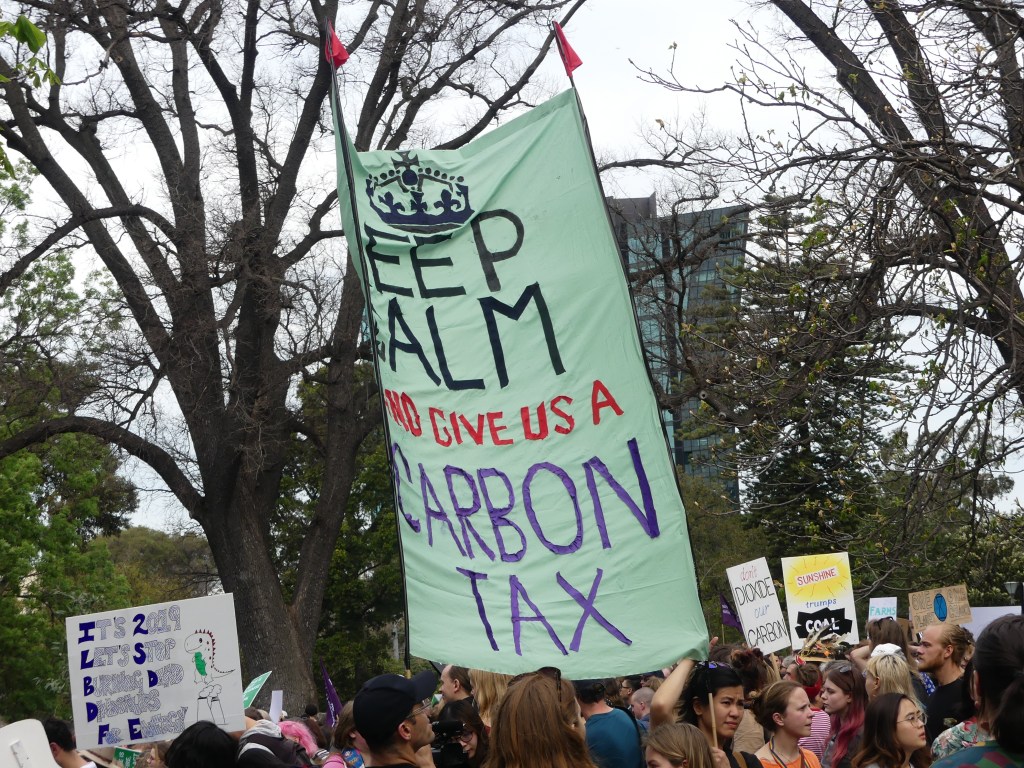

So, last Friday, full of guilt and admiration for our young people I headed into the city, on the train, to attend the march last Friday. I arrived at the Treasury gardens about 2pm and watched and photographed as people began to arrive, with their placards and signs. There were people of all ages, school kids, families with babies, grandparents, concerned groups, unions and individuals like me. It was wonderful to see the diversity of people attending, all with the same purpose; to raise attention about the plight of our planet, to demand action from our government and to show solidarity with other concerned people of the world. By 3pm the gardens were packed with people, the speeches began and then the march down Collins street. It took about an hour to move from my spot at the Spring street end of the gardens into Collins street, the crowd was so huge. People in office buildings watched from above, many waving or showing the peace sign in solidarity. Estimates of the crowd numbers have been between 100,000 and 150,000. I have no idea how many people were there, but it was the biggest crowd I have ever been in. I have marched before in 2003 against the Iraq war and in 1975 after the Whitlam dismissal. It felt bigger than either of those.
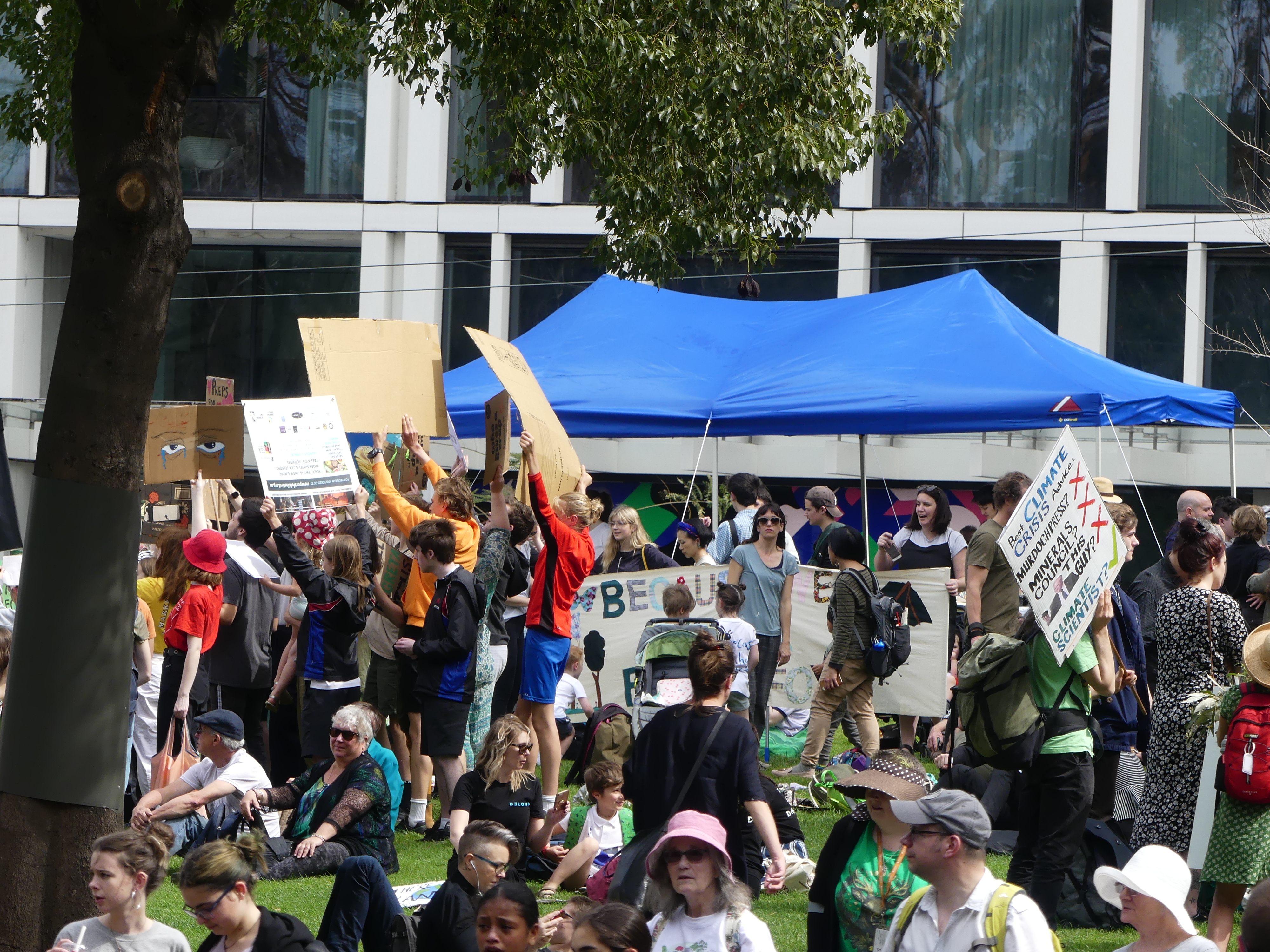
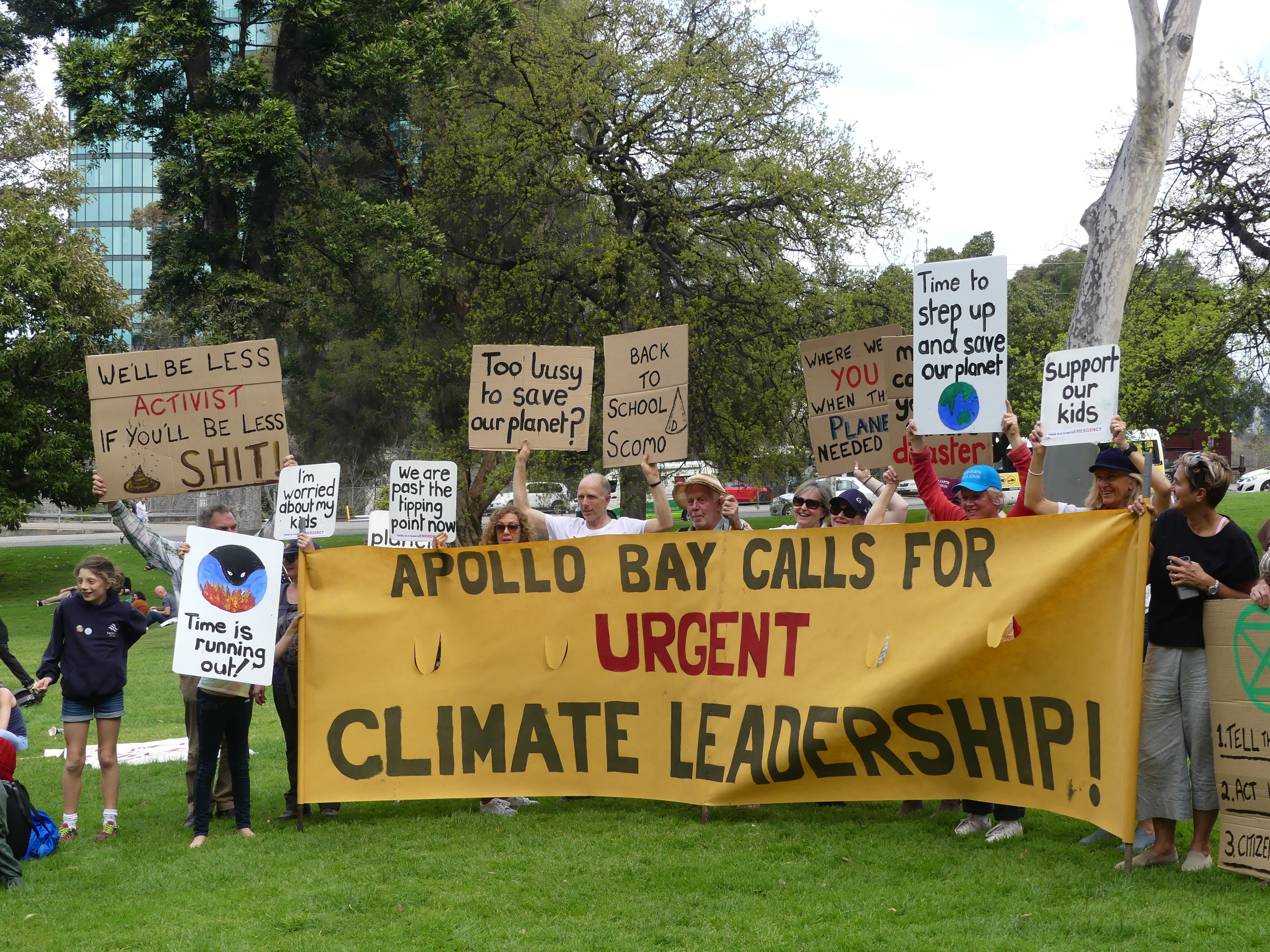
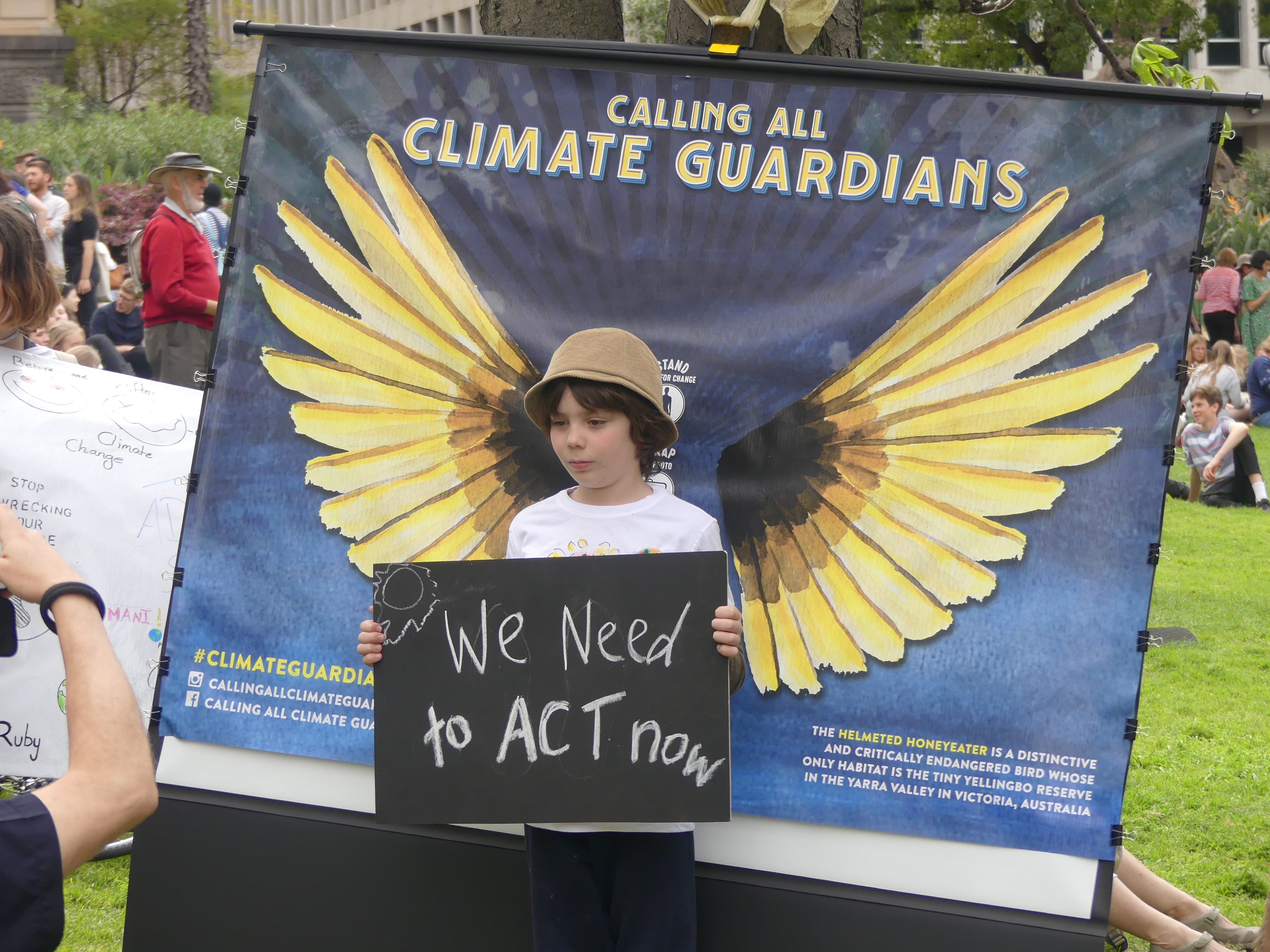
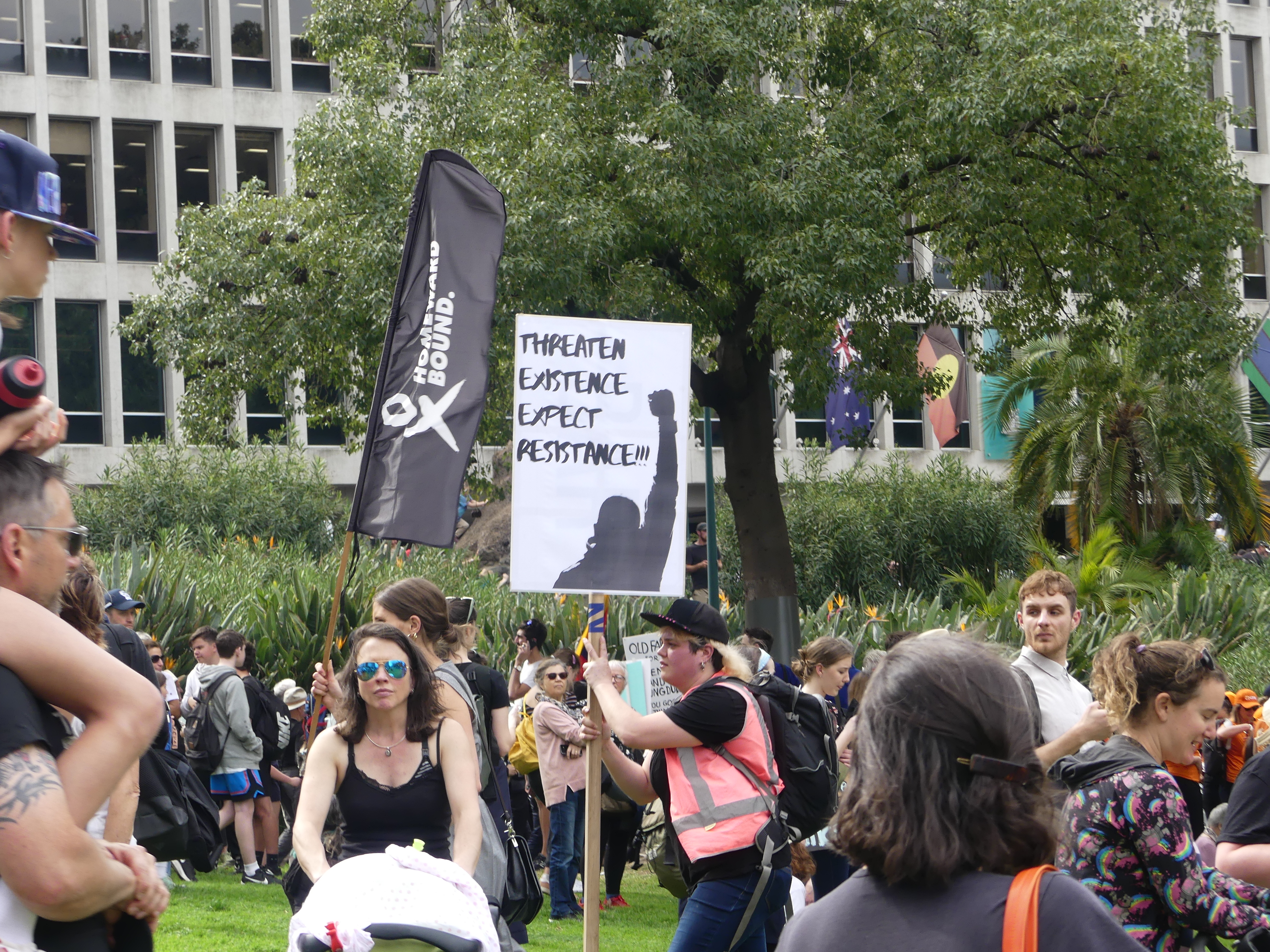
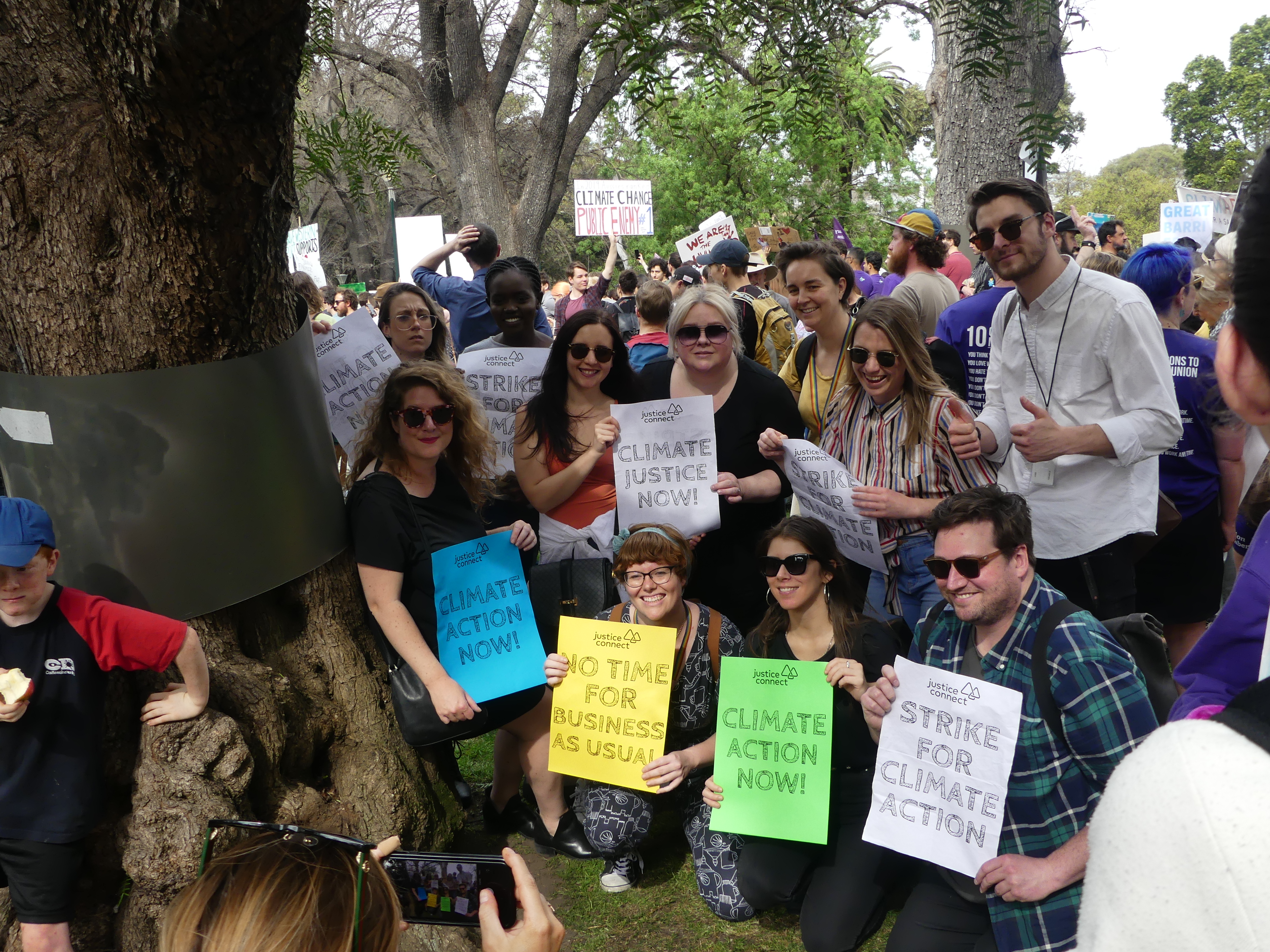
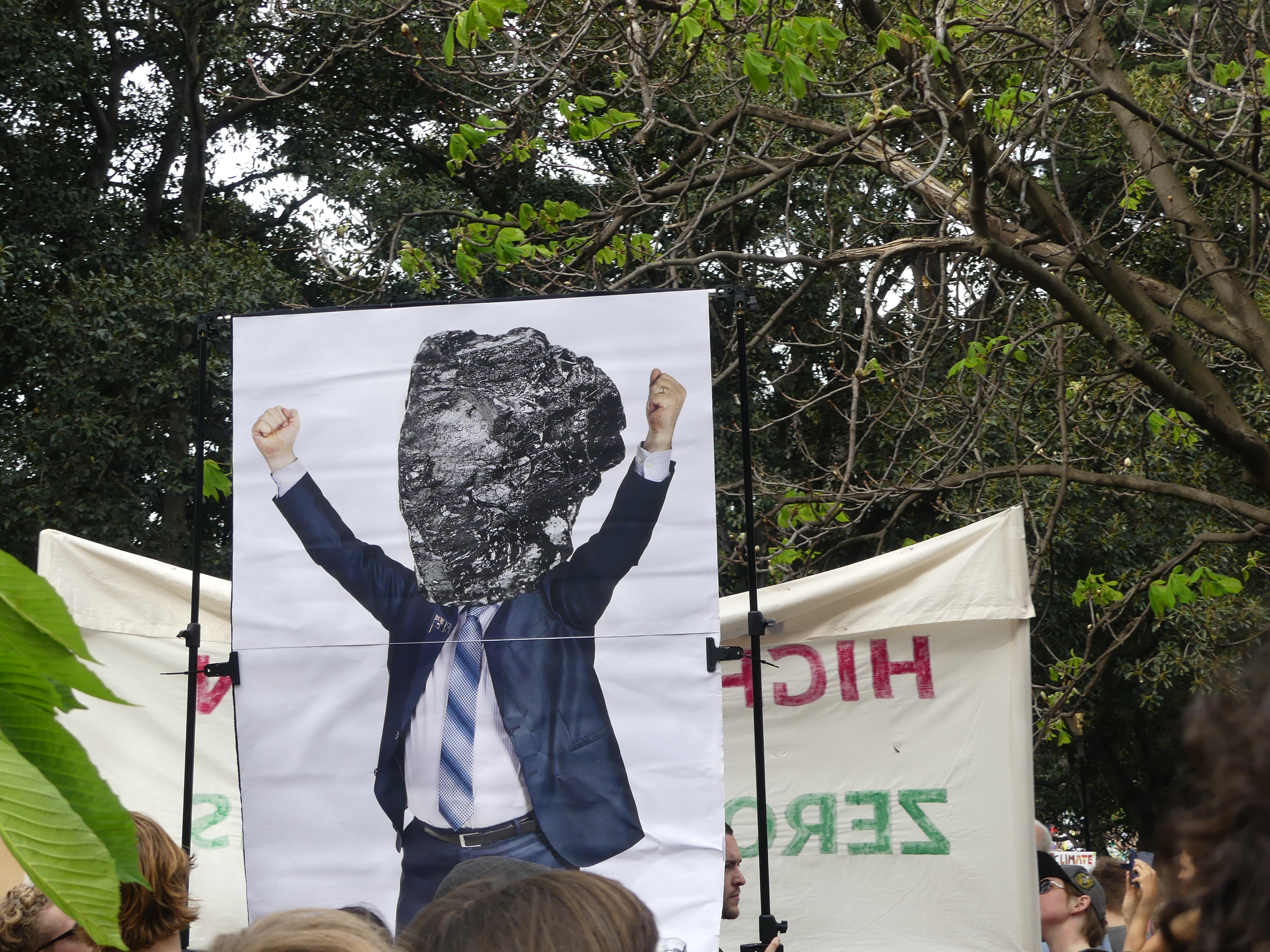
The great thing was, there was no aggravation, everyone was patient and careful and mindful of being kind to their neighbour. The police were present but discreet, I didn’t see any mounted police or any in riot gear, as I have at previous events. It felt good to be part of something global, and to be able to contribute to such a wonderful gathering. This is history in the making, and I want to be on the right side of it.
When I listened to Greta Thunberg’s address to the UN, I was so moved and felt so sad and angry that she feels forced to do this because no-one else is. She is a very brave girl, and she has mobilised millions of people around the world to stand up and call for climate action. What an amazing accomplishment.
It does make you realise, when you think of people like Greta Thunberg, Malala Yousafzai and Emma Gonzalez, that young girls can do amazing things. These young girls can change the world. Their idealism and ability to articulate the change that needs to happen is just awesome.
There are also, of course, lots of other people working towards this change. Two old men come to mind: David Attenborough and David Suzuki; both have been advocates of preserving the natural environment for decades. I have books on my shelves written by David Suzuki in the early 1990’s; he has been a tireless advocate of conservation for most of his life.
So, what now? I really don’t know. The climate deniers are in power; the Murdoch press, the coal lobby and the oil companies pull their strings. The only way we can get change is to change our governments. Its hard to get people to vote for changes that might harm their immediate hip pocket, because tax cuts now are more compelling than their children’s future. People fear losing their jobs if coal and oil dependent industries have to shut down; but all great changes throughout history have meant that some people lose money, especially those people who refuse to see that change is coming. The idea of abolishing slavery was thought to be unaffordable, because the economies of the day thrived on the backs of slaves; yet it did happen, and the world economy did not fall apart. (Although you could say that slavery still exists, but that’s another story)
Whilst I feel despair and worry about the future of our beautiful blue planet, I am hopeful that things will change soon. I feel the tide is turning, but I know that the people in power who feel threatened will not give up without a fight. Now they are resorting to hate speech against a 16 year old girl, this is a good sign, because it shows that they know they are under attack. It is likely that this generation, especially those old white men in power who refuse to listen, will go down in history as the wilful destroyers of the only planet we have to live on; what a legacy!
As Greta so eloquently said, ‘The world is waking up. And change is coming whether you like it or not.” I hope you’re right Greta.
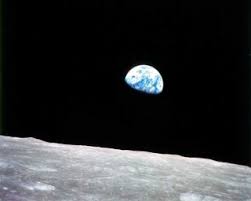
There is no planet B, there is Only One Earth, and our pale blue dot is beautiful – why would we continue down this path of destruction?
 Sue's next thing